

Why Zebra Finch Cage Size Matters More Than You Think
Imagine living your entire life in a space where you can’t even take a few full steps. That’s what life is like for zebra finches kept in cages that are too small. Cage size isn’t just about fitting the bird in—it’s about giving your finch room to fly, exercise, and stay mentally stimulated. The size of the cage directly affects their health, happiness, and even lifespan. A cramped cage may lead to muscle atrophy, aggression, depression, and weakened immunity. On the other hand, a spacious flight cage supports natural behavior, reduces stress, and encourages healthy social interaction.
The Quick Answer: What’s the Ideal Zebra Finch Cage Size?
For a single pair of zebra finches, the recommended cage size is at least 30″ long × 18″ wide × 18″ high. But here’s the catch: length is more important than height. Zebra finches aren’t vertical climbers—they’re horizontal flyers. So, the more horizontal space you provide, the closer you’ll get to replicating their natural flight patterns.
| Number of Finches | Minimum Cage Length | Minimum Cage Width | Minimum Cage Height |
|---|---|---|---|
| 2 (one pair) | 30 inches | 18 inches | 18 inches |
| 4 (two pairs) | 36–40 inches | 18–24 inches | 18–24 inches |
| Small flock (6+) | 48 inches or more | 24+ inches | 24+ inches |
💡 Pro Tip: Always size up, never down. More space = happier birds.
Why Natural Behavior Should Guide Cage Choice
Zebra finches in the wild live in open environments, often flying from shrub to shrub in search of food, mates, and shelter. They’re not sedentary birds—they fly frequently in short bursts, and need constant stimulation. Keeping them in a narrow, vertical cage stifles this instinct, leading to boredom and behavioral issues like feather plucking or excessive calling.
To keep your finches active and engaged, their cage must allow:
- Short, horizontal flights
- Visual stimulation (position near safe windows or natural light)
- Space for multiple perches without cluttering
- Room for toys, cuttlebones, and bathing dishes
What You’ll Learn in This Guide
This article is your complete, research-backed guide to choosing the right zebra finch cage size. You’ll learn:
- How cage dimensions affect your finch’s physical and mental health
- The best cage shapes and layouts for finches
- Tips on bar spacing, materials, and accessories
- Recommended cages (with Amazon links) for different flock sizes
- Mistakes to avoid when buying or setting up a cage
- How to expand or upgrade as your flock grows
Why Cage Size Matters for Zebra Finches
When it comes to zebra finch care, cage size isn’t a luxury—it’s a necessity. These birds aren’t meant to perch and sit still all day. They’re built to move, socialize, and explore, and their environment must support that. If the cage fails to meet their behavioral needs, the results can be both physically and mentally damaging.
Natural Behavior in the Wild
Zebra finches originate from the open grasslands of Australia, where they’re constantly on the move. Unlike parrots that may enjoy climbing or hanging upside down, zebra finches:
- Engage in frequent, short horizontal flights
- Live in social flocks, flying together from shrub to shrub
- Spend most of their day exploring, foraging, and communicating
This lifestyle requires space—not just to perch, but to actively fly back and forth. That’s why cage length is more important than height.
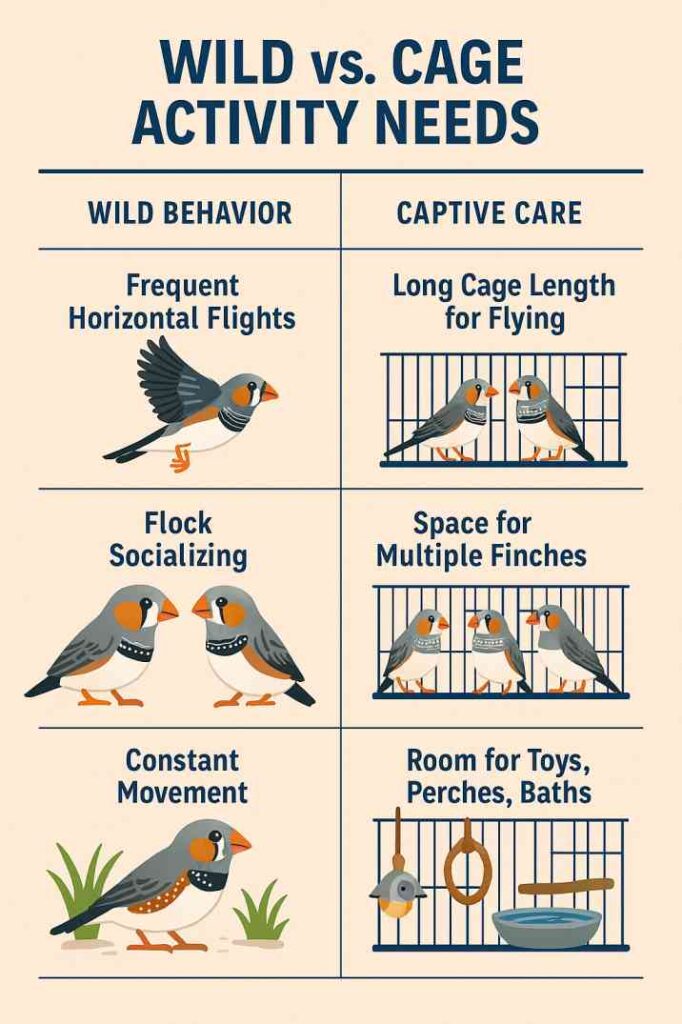
| Wild Behavior | Captive Need |
|---|---|
| Burst flights | Long cage length for flying |
| Flock socializing | Space for multiple finches |
| Constant movement | Room for toys, perches, baths |
A vertical, cramped cage contradicts their natural lifestyle. Imagine trying to do cardio in a broom closet—it’s the same for them.
Consequences of Inadequate Cage Size
When zebra finches are kept in undersized cages, the problems show up fast—and they’re serious.
Physical Consequences
- Muscle Atrophy: Lack of flight leads to weakened wing and chest muscles
- Obesity: Limited movement causes rapid weight gain, especially in captive diets
- Under-Stimulation: Without room to move, they lose their natural energy and alertness
Psychological Effects
- Stress and Anxiety: Signs include constant calling, fluttering, or aggression
- Feather Plucking: A destructive habit triggered by boredom or anxiety
- Stereotypic Behavior: Pacing, head bobbing, or repetitive movements that signal poor welfare
📉 Reduced Lifespan: Studies and avian experts agree—finches in restrictive cages tend to live shorter, unhealthier lives, especially when isolated or unable to fly.
| Problem | Cause | Outcome |
|---|---|---|
| Muscle loss | No space to fly | Weak wings, poor coordination |
| Stress & aggression | Lack of mental stimulation | Biting, fighting, plucking |
| Breeding failure | Poor condition and anxiety | Abandoned eggs, infertile pairs |
If you’re planning to breed finches, cage size becomes even more critical. Small, tight spaces discourage mating, disrupt nesting behavior, and increase chick mortality.
🛒 Recommended Amazon Product
Prevue Pet Products Flight Cage – 31” long, great for a pair or small group. Easy to clean, well-ventilated, and designed for finch-level activity.
The Ideal Zebra Finch Cage Size: Guidelines & Minimums
Choosing the right cage isn’t just about fitting it in your room—it’s about giving your zebra finches enough room to thrive. These birds are high-energy and social, and their health directly depends on having enough space to fly, interact, and rest.
Basic Minimums (Per Pair)
If you’re housing just one bonded pair of zebra finches, here are the absolute minimums:
| Dimension | Minimum Size |
|---|---|
| Width (flight area) | 30 inches (76 cm) |
| Height | 18 inches (45 cm) |
| Depth | 18 inches (45 cm) |
| Volume | 12,000–15,000 cm³ |
| Floor Space | 450–500 in² |
📌 Note: Width is non-negotiable. Zebra finches need room for horizontal flight, which is a key part of their natural movement. Vertical cages with little width do not meet their needs.
For Multiple Finches
Zebra finches are happiest in pairs or small groups—but more birds means more space.
- Add 3–4 ft² of floor space for every additional pair
- Avoid vertical cages; instead, go for wide, rectangular designs
- Prioritize flight space: long > tall
| Number of Finches | Minimum Cage Size (L×W×H) | Volume (cm³) | Notes |
|---|---|---|---|
| 2 (1 pair) | 30×18×18 in | 15,000 | Minimum for well-being |
| 4 (2 pairs) | 36×20×20 in | 23,000+ | Add extra perches/toys |
| 6+ (colony) | 48×24×24 in or more | 40,000+ | Best in a flight cage or aviary |
Breeding Cage Considerations
When breeding, many finch keepers use slightly smaller cages to help encourage bonding and reduce distractions—but this is temporary and comes with rules.
- Breeding cages can be around 24×16×16 inches
- Birds must still have daily out-of-cage flight time
- Once chicks fledge, move the family to a larger flight cage
⚠️ Don’t breed in a cramped environment. Lack of space stresses the parents, which can lead to abandoned eggs, underfed chicks, or territorial aggression.
🛒 Suggested Amazon Cage Picks
| Product | Size | Best For |
|---|---|---|
| Prevue Pet Products Flight Cage | 31×20×20 in | 1 pair or 2 pairs |
| Yaheetech Extra Large Flight Cage | 53×32×24 in | Colony or aviary setup |
| Mcage Breeding Cage | 24×16×16 in | Temporary breeding setup |
Flight vs. Climbing: Why Horizontal Space is Non-Negotiable
One of the most misunderstood aspects of zebra finch care is cage shape. It’s not just about how big a cage is—it’s about how that space is distributed. Zebra finches aren’t climbers like parrots. They’re true flyers, and if they can’t fly horizontally, they’re missing out on the single most important form of exercise they need.
Zebra Finches Are True Flyers
Zebra finches evolved in wide, open grasslands where they dart from shrub to shrub in quick, level bursts of flight. This instinct doesn’t disappear in captivity.
- They need at least 2–3 feet of uninterrupted lateral space to perform natural flight behaviors.
- Wing flapping on a perch is not flight. It’s frustration.
- Without proper flight, they can develop:
- Muscle atrophy
- Obesity
- Aggression or boredom-based behaviors
🕊️ Fun Fact: In the wild, zebra finches fly low and fast—staying just a few feet above ground for efficiency and safety. Your cage should mimic that.
Tall but Narrow Cages: A Harmful Myth
Many pet stores or online listings promote “tall parrot cages” with ladders, toys, and multi-level setups. But this layout is not suitable for zebra finches.
- Finches don’t climb—they fly horizontally.
- They’ll stay near the top of a tall cage and ignore lower levels.
- Even large vertical cages feel claustrophobic if they lack width.
❌ A 5-foot-tall cage with only 12 inches of width is worse than a 2-foot-wide cage with 18 inches of height.
📉 Chart: Zebra Finch Activity in Wide vs. Tall Cages
Here’s a simplified comparison of zebra finch behavior based on cage shape:
| Cage Shape | Avg. Daily Flights | Use of Lower Levels | Stress Indicators (e.g. feather picking, pacing) | Physical Health |
|---|---|---|---|---|
| Wide Rectangle (e.g. 30×18×18) | 20–40 short flights | High | Low | Healthy |
| Tall Narrow Tower (e.g. 18×18×36) | <10 flaps only | Very low | High | Poor muscle tone |
| Flight Cage / Aviary | 50+ natural flights | Moderate | Very low | Optimal |
🛒 Recommended Wide Cages (Avoid Tall “Towers”)
| Product | Dimensions | Shape | Ideal Use |
|---|---|---|---|
| Prevue Hendryx Flight Cage | 31×20×20 in | Wide | Best for 1–2 pairs |
| ZENY Bird Cage | 53×32×24 in | Extra-wide | Great for colonies |
| Yaheetech Rolling Flight Cage | 32×30×18 in | Wide | Spacious with mobility |
Bar Spacing, Materials, and Safe Design
Once you’ve got the right size and shape, the next crucial element is cage safety. Zebra finches are tiny, agile birds that can injure themselves or escape if the design isn’t bird-safe. It’s not just about convenience—it’s about protecting their health, wings, and lifespan.
Bar Spacing: Small Birds, Small Gaps
Zebra finches may be small, but they are curious and can wedge themselves into dangerous spaces if bar spacing is too wide.
| Feature | Recommended |
|---|---|
| Ideal bar spacing | ½ inch (1.2 cm) or less |
| Too wide? | Finches can squeeze through or get stuck |
| Vertical vs. horizontal bars | Horizontal preferred for climbing attempts (though finches rarely climb) |
🛑 Caution: Bar spacing over ⅝ inch is a serious hazard—either for escape or fatal head entrapment.
Materials & Finishes: Safety First
The materials a cage is made from have long-term effects on your finch’s health. Some cheaper cages may look fine at first but become dangerous over time.
| Material Type | Safe? | Notes |
|---|---|---|
| Stainless steel | ✅ | Durable, rust-proof, easy to clean |
| Powder-coated steel | ✅ | Safe if high-quality; prevents rust and peeling |
| Galvanized wire | ❌ | Risk of zinc poisoning—can be fatal |
| Painted finishes | ⚠️ | Safe only if non-toxic & well-sealed—avoid if flaking |
| Plastic frames | ⚠️ | Lightweight but not chew-proof or durable for long term |
✅ Choose cages with rounded edges, rust resistance, and certified non-toxic coatings.
Smart Construction = Safe & Easy Maintenance
Look beyond aesthetics. A finch cage should be functional for daily care, enrichment, and cleaning.
Must-Have Cage Design Features:
- ✅ Swing-out feeder doors: So you can change food/water without opening the main door.
- ✅ Slide-out cleaning tray: Makes daily waste cleanup hassle-free.
- ✅ Secure latches: Especially important if kids or pets are around.
- ✅ Wide front doors: Easier to place or rearrange perches, toys, or nests.
💡 Tip: Avoid cages with many decorative curls or complicated shapes. They’re harder to clean and easier for finches to get injured on.
🛒 Safe & Well-Designed Cages on Amazon
| Product | Key Safety Features | Ideal For |
|---|---|---|
| Prevue Pet Products Flight Cage | ½” bar spacing, powder-coated, wide doors | 1–2 pairs |
| Yaheetech Rolling Bird Cage | Rust-resistant metal, secure latches, large doors | Indoor colony setup |
| A&E Cage Co. Flight Cage | ½” spacing, multiple swing-out doors | Breeding or display |
Flight Cages and Aviaries: The Gold Standard
If standard cages are about meeting minimum needs, flight cages and aviaries are about maximizing your zebra finch’s quality of life. These setups provide the space they truly need to fly, interact, and stay healthy—physically and mentally.
What Is a Flight Cage?
A flight cage isn’t just a bigger cage—it’s a cage designed with flight in mind.
| Feature | Description |
|---|---|
| Purpose | Allows birds to fly horizontally, not just hop |
| Typical Length | 36–60 inches or more |
| Shape | Wide rectangle (longer than it is tall) |
| Used For | Small flocks, breeding pairs, bird-safe exercise |
💡 Think of it as the difference between a studio apartment and a yoga studio—one is livable, the other is designed for movement.
Indoor vs. Outdoor Aviaries
When you’re ready to go beyond a flight cage, aviaries are the next level. But should you build one indoors or outdoors? Each has benefits and trade-offs.
⚖️ Comparison: Indoor vs. Outdoor Aviaries
| Feature | Indoor Aviary | Outdoor Aviary |
|---|---|---|
| Control over temp/light | ✅ Easier to regulate | ❌ Needs extra insulation/shading |
| Predator protection | ✅ Safer by default | ❌ Needs netting, metal base, tight locks |
| Maintenance | ✅ Clean and dry area | ⚠️ Messier, must weatherproof everything |
| Enrichment options | ✅ Toys, branches, human bonding | ✅ Natural light, fresh air, weather cycles |
| Cost | 💰 Higher if converting a room | 💰 Lower if using yard space |
🛠️ Tip: Outdoor aviaries must be protected from:
- Cats, raccoons, snakes, rats
- Harsh sun or rain
- Cold drafts and strong winds
Custom-Built Options
If commercial cages fall short, consider DIY or modular setups tailored to your space and birds.
Popular DIY Features:
- PVC or wood frame with wire mesh walls
- Removable floor trays and access doors
- Built-in feeders and perch rails
- Wheels for mobility (for indoor units)
Amazon Modular Solutions:
| Product | Description | Use |
|---|---|---|
| PawHut Modular Flight Cage Panels | Build-your-own custom flight space | Best for larger homes |
| Aivituvin Large Outdoor Aviary | Weather-treated wood, predator-proof | Outdoor finch flocks |
| BestPet Bird Cage Extra Wide | 63″ wide, multi-level access doors | Large indoor setup |
🔷 6. Cage Layout: Making the Most of the Space
Even the best-sized cage can feel restrictive if poorly organized. Thoughtful layout planning ensures your zebra finches can fly, forage, play, and rest naturally, all while staying safe and stress-free.
🪵 6.1 Perch Placement: Create Flight Paths, Not Obstacles
Perches should support natural behavior—not block it.
| Do ✅ | Don’t ❌ |
|---|---|
| Use natural branches with varying diameters | Use only smooth dowels (can cause foot fatigue) |
| Place perches at opposite ends to encourage flight | Cluster perches in the center (blocks flying) |
| Ensure no perch directly over food or water bowls | Place perches above bowls (leads to contamination) |
| Leave at least 2–3 feet of open horizontal space for flight | Overcrowd with toys/perches |
🌿 Natural perches also help wear down nails and prevent foot sores (bumblefoot).
🍽️ 6.2 Feeding Zones: Easy to Access, Out of the Way
Zebra finches forage often, so food and water must be accessible but unobtrusive.
- Ideal location: In a cage corner or near the short ends
- Avoid: Placing food under perches to prevent droppings contamination
- Use: Shallow bowls for seeds, separate containers for greens, grit, and calcium (like cuttlebone)
Optional feeding station setup:
cssCopyEdit[Corner Setup]
[🍽 Bowl]    [💧 Water Cup]
[     No perch overhead!     ]
🎠 6.3 Enrichment and Privacy: Keep It Stimulating
Zebra finches need more than just food—they need mental stimulation and places to retreat.
✅ Recommended Enrichment:
- Swings: simulate branch motion
- Shred toys: like coconut fiber, paper strips
- Mirrors (occasionally): Can soothe lone birds, but may cause obsession
🛑 Avoid:
- Toys that dangle too low into flight space
- Loud, bright, or flashing toys meant for parrots
🪹 Nesting and Privacy:
- Nesting boxes only if breeding (otherwise may trigger hormonal behavior)
- Visual barriers: like leafy plastic vines or corner hides can reduce stress
📐 Example Cage Layout (Top View)
pgsqlCopyEdit|------------------------------------------------|
| 🪵 Perch             🛝 Swing       🍃 Plant      |
|                                                 |
|    ✂️ Shred Toy        🪹 Nest Box (breeding only)|
|                                                 |
| 🍽 Food Bowl       💧 Water Cup       🪵 Perch    |
|------------------------------------------------|

→ Flight path runs from left to right (uninterrupted)
🧠 Pro tip: Rotate toys and perches every 1–2 weeks to mimic the changing environment of the wild.
What to Avoid When Choosing a Cage
Selecting the right cage for your zebra finches is crucial, but just as important is knowing what to avoid. Making a poor choice can seriously impact your birds’ health, happiness, and lifespan. Here are some common pitfalls to watch out for when buying a cage.
Pet Store Cages: Often Undersized and Overpriced
Pet store cages may seem like a convenient option, but many are designed for general use and not tailored to the unique needs of zebra finches. Typically, these cages are:
- Too small horizontally: Many pet store cages focus on vertical height rather than width. Since zebra finches require horizontal flight space, these cages restrict their natural movement.
- Overpriced for what you get: Pet stores often charge premium prices for cages that are smaller and less functional than better options you can find elsewhere.
- Poorly constructed: The materials and build quality can be lower, leading to quicker wear and safety issues.
Choosing a cage solely because it’s “bird-sized” or convenient at a pet store can lead to long-term frustration and health problems for your finches.
“Starter Kits”: Low Quality Accessories and Generic Fit
“Starter kits” are another tempting option. These packages usually bundle a cage with accessories like feeders, perches, and toys. But buyer beware:
- Accessories included are often cheap plastic, flimsy, and not suitable for the needs of finches.
- These kits are marketed as “all-in-one” for any bird species, ignoring the specific needs of zebra finches who require horizontal flight space and natural perches.
- The cage itself tends to be undersized or narrow, designed more for convenience than bird well-being.
If you want to give your finches a great home, investing separately in a quality cage and well-chosen accessories will pay off.
Used or Unsafe Cages: Hidden Dangers
Buying a used cage can seem like a budget-friendly solution, but it comes with risks:
- Rust and corrosion: These weaken cage bars, risking injury or escape.
- Chipped paint: Toxic if ingested by curious finches.
- Sharp wire ends or broken parts: Can cause cuts or get birds stuck.
Even if the cage looks good at first glance, always inspect carefully for hidden hazards. When in doubt, it’s safer to invest in a new, bird-safe cage.
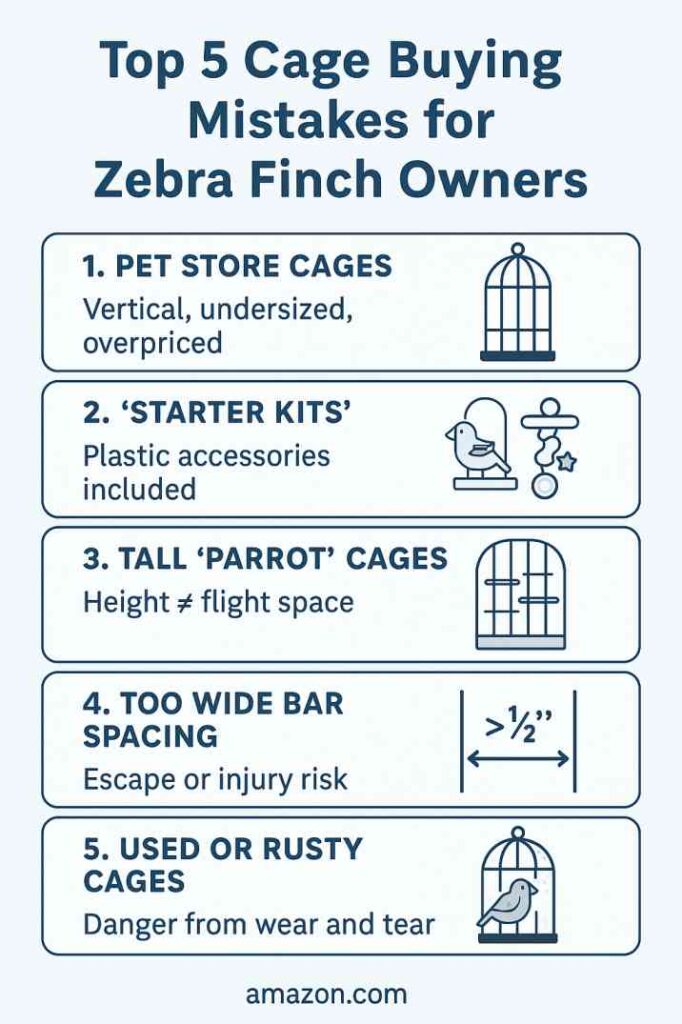
Infographic Suggestion: Top 5 Cage Buying Mistakes for Zebra Finch Owners
- Choosing a cage too small horizontally
- Buying cages with inappropriate bar spacing
- Falling for “starter kits” with poor accessories
- Buying cages made from unsafe materials (rust, chipped paint)
- Assuming pet store cages fit all bird types
Recommended Product
If you want to avoid these pitfalls, here’s a reliable flight cage that meets finch needs perfectly:
- Prevue Hendryx F040 Flight Cage — Known for spacious horizontal flight space and sturdy construction. Available on Amazon USA, it comes with easy-to-clean trays and secure latches, making it a great long-term home for your finches.
Recommended Cages and Products
Choosing the right cage is the foundation for a happy and healthy zebra finch. But pairing that cage with quality accessories can truly enhance your birds’ environment, making their home more comfortable and stimulating. Below, you’ll find some of the best flight cages available on Amazon (USA), along with must-have accessories that complement a proper cage setup.
Best Flight Cages on Amazon (USA)
Prevue Hendryx F040 Flight Cage
This cage is a perennial favorite among finch owners for good reason. It offers a generous horizontal flight space of 30 inches wide and 18 inches high, hitting the sweet spot for a pair or small group of zebra finches. Built with powder-coated steel, it’s durable, easy to clean, and safe. The swing-out doors provide easy access for feeding and cleaning, while the deep pull-out tray makes maintenance hassle-free.
Yaheetech 39-inch Extra Large Finch Cage
If you want extra space for a small flock, the Yaheetech cage is an excellent pick. Its 39-inch length provides ample horizontal flight room, and the multiple perches allow for natural hopping and movement. The cage’s design prioritizes bird safety with a sturdy build and smooth powder-coated finish. Its size is especially suitable for 4 or more finches, making it a great choice for those looking to create a lively finch community.
Mcage 36x24x24 Horizontal Flight Cage
For those who want an aviary-style experience indoors, the Mcage flight cage offers a spacious environment with a 36-inch length and 24-inch width and height. This cage supports flight and exploration while being easy to access and clean. It’s ideal for breeders or serious finch enthusiasts who want to replicate the feel of a natural habitat. The wider design lets finches truly stretch their wings and glide, reducing stress and promoting exercise.
| Cage Model | Dimensions (L×W×H in inches) | Ideal For | Key Features |
|---|---|---|---|
| Prevue Hendryx F040 | 30 × 18 × 18 | 1-2 finches | Powder-coated steel, easy access |
| Yaheetech Extra Large Finch | 39 × 18 × 20 (approximate) | Small flocks | Spacious, multiple perches |
| Mcage Horizontal Flight Cage | 36 × 24 × 24 | Breeders & flocks | Aviary-style, wide flight space |
Accessories to Pair With a Proper Cage
A quality cage is only the beginning. To create a healthy and enriching environment for your finches, consider adding:
- Natural Perches: Branches from safe wood species with varying diameters help keep feet healthy and simulate a natural habitat.
- Mineral Blocks or Cuttlebones: Essential for calcium and beak maintenance, these should be easily accessible.
- Mirrors (Optional): Use sparingly—some finches enjoy them, but others may become territorial or stressed.
- Bath Dishes: Zebra finches love water baths; provide a shallow bath dish placed away from food to keep the cage clean.
Adding these thoughtful accessories can reduce boredom, improve foot health, and keep your finches mentally and physically stimulated.
Conclusion: Space = Life
When it comes to caring for zebra finches, cage size isn’t just a matter of convenience—it’s a direct reflection of their quality of life. These lively little birds thrive on horizontal flight, exploration, and social interaction. A cramped or vertical-only cage stifles their natural behaviors, leading to stress, health issues, and a shortened lifespan.
Giving your finches ample space to glide, hop, and fly isn’t just a luxury; it’s essential for their physical fitness and mental well-being. Investing in a properly sized, flight-friendly cage shows respect for their nature and helps ensure many happy, active years together.
If you’re serious about finch care, think beyond just a “cage.” Consider it their home, their playground, and their sanctuary.
Remember: Space truly equals life for your zebra finches. Choose wisely, and watch your feathered friends thrive!
Recent Posts
The Ultimate Owl Finch Cage Size Guide: More Than a Cage, It's a World
You’ve done it. You’ve brought home one of nature’s most charming creations, the Owl Finch. You watch, mesmerized, as this tiny, feathered jewel explores its new surroundings. But then, a...
The Ultimate Guide to the Owl Finch Breeding Season: A Story of New Life
There is a moment every bird keeper dreams of: a faint "peep" from the nest box that signifies new life. Yet, for many, the path to that moment feels daunting. The questions surrounding the Owl Finch...